

Of Reason and Mysticism
Mysticism (noun): belief that union with the absolute, a knowledge inaccessible to the intellect, may be attained through contemplation and self-surrender.
Reason (noun): the power of the mind to think, understand, and form judgments logically. A statement offered as the rational basis for an action or belief.
Reason (verb): to think, understand, and form judgments by a logical process, rather than by intuition or feeling.
Mysticism reaches understanding through an experienced state.
Reason reaches understanding through a performed process.
Mysticism is not the opposite of reason.
Mysticism extends reasons past where reason alone can go.
The current materialist mindset treat mysticism as a failure of rigor, a shortcut taken by people unwilling to seek for proof. Mysticism, the way I understand it, is not anti-science or anti evidence, it is evidence of a different kind. Not evidence that compete with reason, evidence that complete reason.
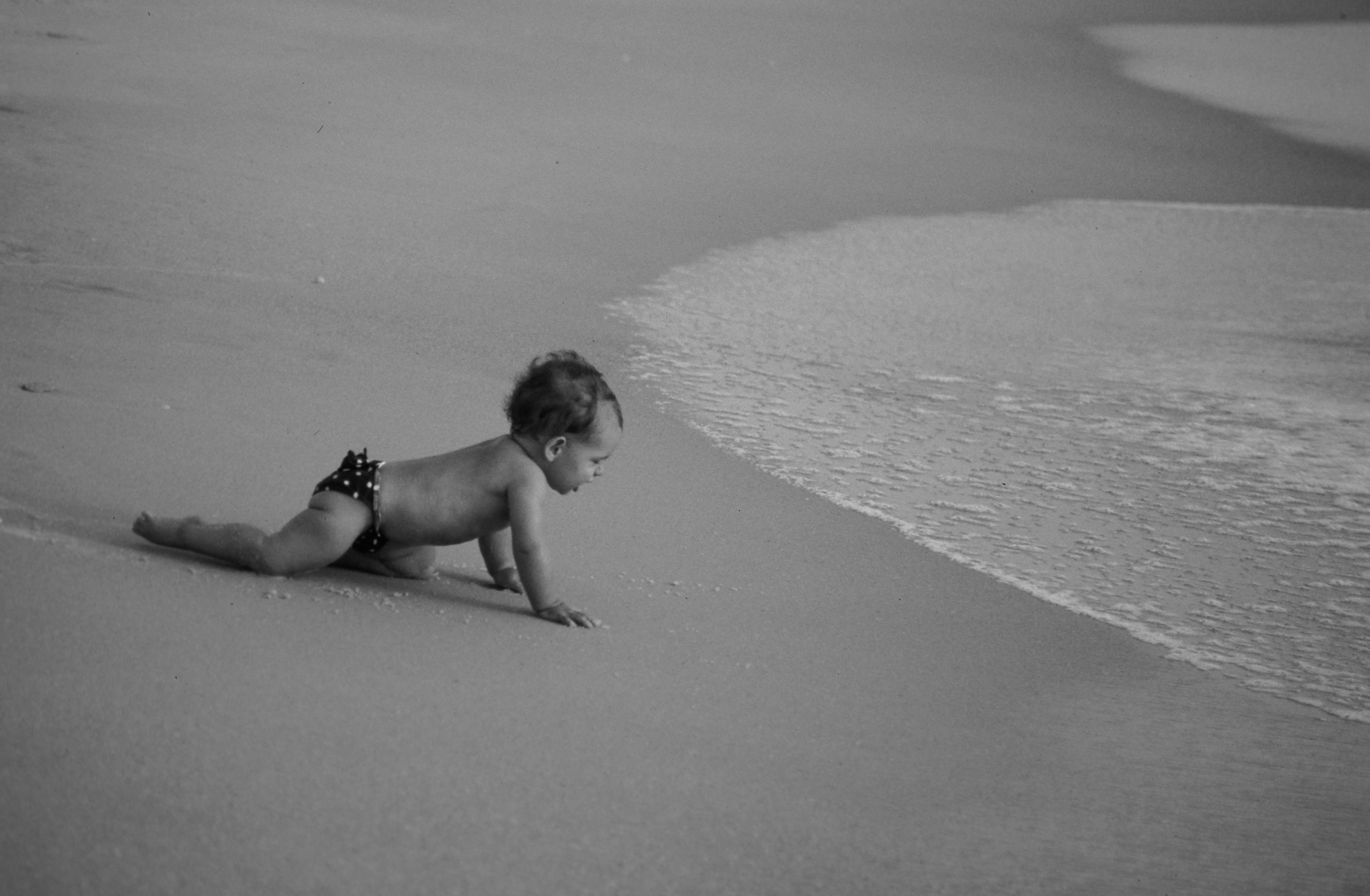
Reason takes us to the shore. Mysticism alone enters the water.
Mysticism is first-person, it is not a short cut to someone else’s.
Mysticism is repeated, across ages and culture.
Mysticism is consistent in ways that demand explanation more than dismissal.
Demonstration Forecloses Faith
In Locked In, Samir, the character at level seven wants demonstration. He seeks proof that survives scrutiny, evidence tight enough to satisfy reason on reason’s own terms. The larger intelligence he seeks to reach by reason offers him a different path: surrender to me and the world is yours. Not surrender after proof. That is control. Surrender instead of proof.
This isn’t a flaw. If the evidence ever closed completely, if it tightened to the certainty of gravity or arithmetic, there would be nothing left to surrender to. You would simply know, the way you know the rain falls. Faith only works when evidence is suggestive but not conclusive. Demonstration, if it ever fully succeeded, would not support faith. It would replace it, and in replacing it, end the very capacity faith is here to develop. Trust.
The stubborn human wants to collapse that gap from the outside, by force of proof. The larger intelligence answers from the inside: cross first, certainty comes after, not before.
The person in the water says to the person on the shore: “Come, the water is amazing!” The person on the shore answer: “Can you prove it?” and misses the experience.
This truth is so hard to communicate, because from outside the experience, that sounds like credulity. There’s no way to verify it from the shore. You have to enter the water to know.
When Repetition Becomes Data
A pattern observed long enough is not an anecdote.
People across centuries, continents, and belief systems who have had no contact with each other report the same structural experience: unity, dissolution of the separate self, a noetic certainty that something was directly known rather than believed.
Near-death experience through coma or accident produces the same report. Psychedelic work produces the same report. Dark retreat produces the same report. In ten years of serving medicine, I have never once met a person who, breaking through to clarity on the other side, came back doubting the existence of an organizing intelligence. Not one.
At some point, repetition becomes science.
Not as tight as physics or math, but not anecdotal either.
The scientific objection is that convergent phenomenology doesn’t prove a shared external referent. Everyone could be hitting the same neurological floor. Everyone could be caught in the same collective delusion, yet not really touching the same reality.
That objection is fair, and also beside the point as we will see here.
The question I am actually asking is not “is the story true.” It is “what does the story produce.” This is the whole intention behind “Change your story, change your world”, that we stop arguing about who has the true story, but that we understand what story yield what results so we can finally chose a better story.
Know the tree by its fruits
The pragmatic William James, father of American psychology, asked the question this way: What concrete difference does a belief make in anyone's actual life. That's the cash-value of an idea.
This is the move that matters here. Judge a belief by the reality it creates, not by whether it can be certified true by the mind and reason.
Look at the record. For most of human history, people related to the earth as alive, as kin, as something we owed reciprocity. That belief produced a frame. It produced relationship.
More recently, the belief shifted: earth as inert matter, available for use. That belief produced extraction at a planetary scale, and we are living inside the result of it right now.
Same world, two stories, two outcomes. The outcome is the argument.
What produces harmony is the proof of the very belief that created it.
The Same Shift, Smaller Scale
I have seen the same shift operating at human scale, in conflict resolution. Two parties blaming each other, pointing fingers, trying to be right, to prove their point, to defend their interest. Blaming is disempowering, it places the source of the conflict outside, where there is no agency. It never ends well.
I remember my mother telling my brother and I, when we had fights.
She used to say “the more intelligent stops first”.
Taking responsibility relocates the cause inside the only person you actually have authority over. The conflict may not resolve right away, yet you stop feeding it. Eventually the conflict is starved of the energy it needs to continue. This is Aikido.
Two persons, two nations, two civilizations. Same logic. The texts that survive centuries are never the ones arguing for a side.
Why the Tao Gets Read
Have you ever wondered why people still read the Tao? Why they still read the Gita? Why Khalil Gibran’s The Prophet sold 90 millions copies worldwide?
None of those texts argue. They are not proving a point. They show a door and invite you through it. They trust the reader’s ability, they trust recognition over persuasion. They are not interesting to prove their point right, they want the reader to find out for themselves. Because the thing they’re pointing at cannot be proven and certainly can’t survive being turned into a case of right and wrong.
The moment anyone try to argue someone into it, they’ve already lost the plot. The point is never to convince. It is to invite.
You can show someone the door.
You can’t give them the recognition that comes while walking through it.
Not All Doors are Optional
So here we are. Someone showed us a door. We wonder if we should walk through it while not knowing what is on the other side. The mind argues, asks, considers options. Many never cross. Without proof it is deemed un-reasonable, and it is.
But not all doors are optional.
The current disharmony is not random. It is the response of an intelligence regulating a reality born from a humanity that has stopped believing in it.
This is not something I can prove or need to. It is something I have come to believe, watching what alignment produces and what its absence costs.
That regulation does not ask permission, the same way fever does not ask for your permission. The same way an ecosystem past its carrying capacity does not negotiate.
We have been invited. We keep our free will. We chose our story. We chose our path. The outcome of our choice will regulate regardless.
Some doors get walked through by choice. Others get crossed anyway.
A Reasonable Bet
So is it reasonable, without trying to prove anything to anyone, without needing scientific confirmation, without holding the story too tightly, to believe in a higher intelligence?
Yes. It is not provable but it is reasonable.
The direct-experience convergence, the results the belief produces, the self-correcting pattern visible in nature itself, none of these alone would suffice, yet stacked together and held loosely, they make the choice reasonable rather than naive.
Which brings me to what I posted about silence, on June 9.
Mind without remainder
I sat in silence many times in my life. A few days to start. Then a few weeks, then all the way to a full month. Silence gives more answers than many words. Each time returning to speak was a challenge. The silence offers a quality of being, a simplicity that no words can offer.
Silence helps us understand the mind.
Most people don’t know mind. They are run by it.
Without silence, they identify completely with the chatter, mistake the fluctuations for the self producing them. You only know mind when you stop it long enough to see through it.
Yogaḥ citta-vṛtti-nirodhaḥ. (Patanjali Yoga Sutra) Yoga is the cessation of the fluctuations of the mind. Not an addition to mind. A seeing beyond it.
There is a lot of conversation going around AI these days. To a certain degree, rightly so. Yet in the silence I realized AI cannot follow me there.
AI is an expansion of mind. It is pure fluctuation, pattern, prediction, fast fluent chatter with nothing behind it to fall silent into. AI is mind without remainder.
AI has no soma to regulate it. AI has no nervous system to drop beneath the noise. AI does not have a body to enter the water. AI cannot touch the gap between the thoughts.
That kind of amplifier, used carelessly, in a species that mostly doesn’t know its own mind to begin with, is exactly the wrong direction to lean into when the actual medicine is stillness.
AI will come with us to the shoreline. AI cannot follow us in the water.
Only the Body Enters
AI can, and probably will, do a lot of damage. It will create disruption and chaos. In that way, it too is part of the great harmonization. AI will change our reality and will get people more into their mind than ever before, hence understanding who they are even less.
Yet AI cannot replace us, because it cannot enter the water.
AI can show someone the shore.
AI can describe the water, point at it, even make the case for why it’s worth entering.
AI cannot enter it for them, and neither can any tool AI uses to make the case.
That part has only ever been done one way.
In silence, by a body, alone.
PS: “Change Your Story, Change The World” is a storytelling endeavor that looks deeply into the psyche that creates the stories we live by.
Because the stories we tell are the reality we live.
Gabriel, thank you so much for this beautiful piece. What resonated with me most was what you wrote about faith:
"The question I am actually asking is not “is the story true.” It is “what does the story produce.”".
At this point, allow me to add something to the picture from the perspective of a physicist—something that may be meaningful for some readers.
The great theories and laws of science— Newton's laws in physics, or the Schrödinger equation, for example—cannot ultimately be derived from anything that came before them. They were born through intuition. Through what you call an immersion in the water.
Of course, once people emerged from the water, they came ashore and dried themselves off. They used the logic of mathematics to analyze what they had found, to understand it, to test it, and to express it. But the essence was born in the water.
Short, sweet, and deeply resonant assessment of why AI will engender harm rather than be the panacea we have been promised. Thank you.