

A Sense of Superiority
I was born in France. I know what it feels like to grow up in a country convinced it does things better than others. Sometimes that’s earned. Mostly it’s an inflated sense of self-importance. France is no better than the US in that regard. It’s just smaller.
There is an old joke from our neighbors in Belgium:
Do you know how to get rich fast?
Buy a Frenchman for what he is worth, and sell him for what he says he is worth.
If you want to get real, ask your neighbors. The Belgians knew.
I have lived in the US for ten years now. Same sense of superiority. Except here it’s at scale. It shows up in this particular habit of distributing the “best in the world” attribute with extraordinary generosity — your teacher, your car, your company’s product, your country’s healthcare. All of it. Best in the world.
Ask the Canadians! They know.
Between 2008 and 2016 I trained yoga teachers, based largely in India, a country I eventually lived in for twelve years. I remember picking up a US yoga magazine and finding a celebratory feature on “the oldest yoga teacher in the world”. A 90-something woman living in the USA.
I hope you catch the irony.
Yoga is roughly 5,000 years old. Born, practiced, transmitted across generations on the Indian subcontinent — most of those teachers anonymous, uncertified, and many well past 100. None of them holding the 200-hour license that, in the USA, legally qualifies someone to teach. The idea that the oldest living yoga teacher on earth would be an American woman who encountered the tradition sometime in the 20th century requires that the world in fact stretches between Los Angeles and New-York.
This isn’t about cultural appropriation, that’s a separate conversation. It’s simpler than that. It’s ignorance. The article didn’t say oldest yoga teacher in the United States. It said the world.
For people from other countries, this habit is more than irritating. It signals that you don’t exist unless the USA has noticed you. That the world is a stage, and the USA is the only actor who counts.
I thought it was worth a small inquiry.
American Exceptionalism
The idea that the USA is exceptional, better even, is not just random cultural noise. American Exceptionalism has a name, a history, and a theology.
American Exceptionalism, the belief that the United States is not merely powerful but fundamentally different in kind from other nations. Uniquely founded on universal ideals rather than ethnicity or territory. Divinely positioned, in some versions, to lead humanity toward its own best future.
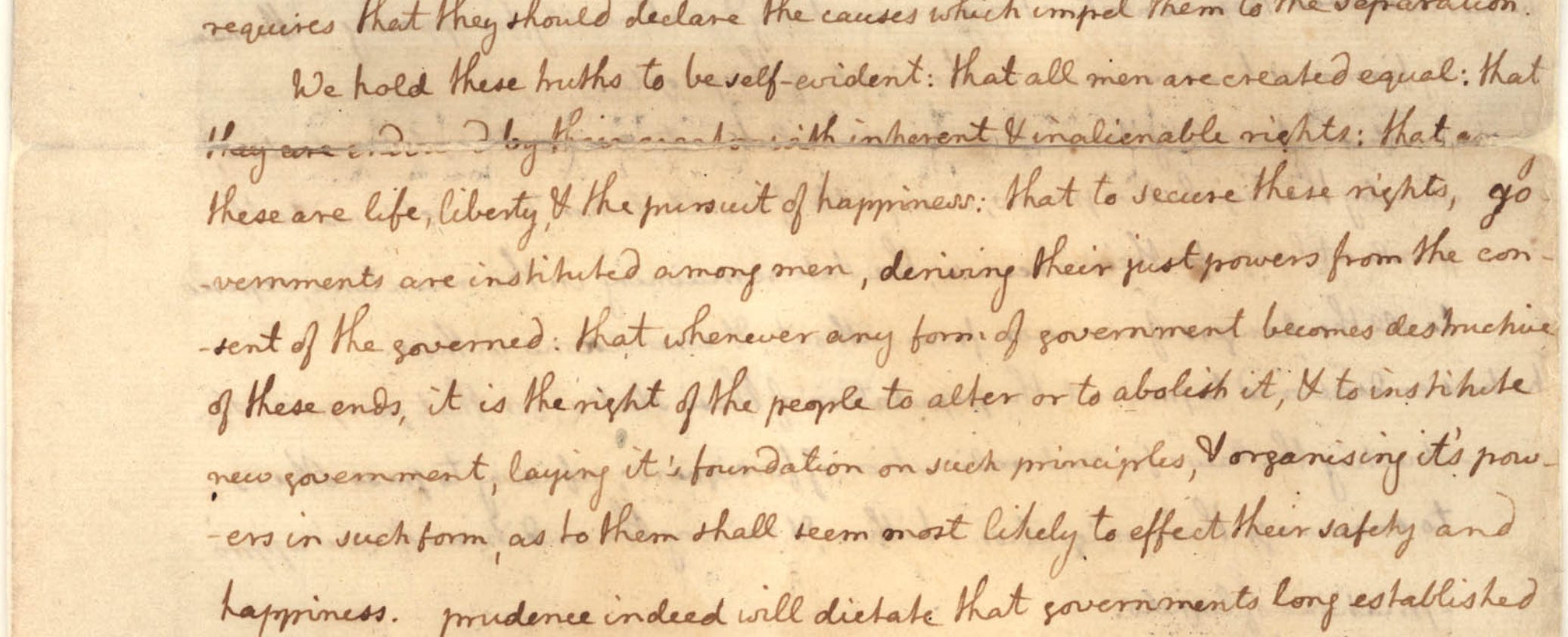
It began as theology. John Winthrop’s in 1630, a city upon a hill, chosen by God, watched by the world. Then turned politics with Jefferson’s in 1776, self-evident truths, universal in scope. By the time Alexis de Tocqueville, another Frenchman with an external eye arrived in 1831, he found a young republic already convinced of its own destiny. He noted something genuinely unusual in the American self-conception. He called it exceptional. He didn’t mean it as a compliment exactly. He meant it as an observation.
He even wrote: “I know of no country in which there is so little independence of mind and real freedom of discussion as in America”.
What started as a description became an ideology. And like all ideologies, once absorbed deeply enough, it no longer needs to pretend. It simply becomes the water you swim in. The reflex that makes a yoga magazine declare an American woman the oldest teacher in the world, without a shadow of doubt, without a moment of curiosity about what might exist beyond its own borders.
Best in the world. Obviously. What else would it be.
The Greatest Nation in the World?
So I looked around. I checked where the US actually stands against other nations on the metrics that matter, not market capitalization or missile count, but the ones that measure whether ordinary people are living well.
Believe it or not, the choice was simple but overwhelming. I could not find an indicator where the USA was coming first and so many where it drags itself at the bottom of the pile. Many important indicators did not make it to the list. The results are instructive.
Healthcare system: ranked 11th out of 11 comparable wealthy nations, last among peers, while spending more per capita than any of them. Best in the world at paying the most for the worst outcomes among rich countries.
Life expectancy: 54th globally. The average American lives 3.7 years less than the average citizen of a comparable wealthy nation. In a country with the most hospitals, the most pharmaceutical companies, and the most medical billionaires on earth.
Maternal mortality: 1st among high-income countries, meaning the highest death rate for women giving birth. No other wealthy nation comes close.
Education: 38th globally in mathematics, below the OECD average. The country that invented the MBA.
Press freedom: 55th. Behind most of Western Europe, and a significant number of countries Americans have never heard of.
Democracy index: 29th, officially classified as a “flawed democracy.” Not by critics. By the Economist Intelligence Unit.
Happiness: 23rd overall. Youth happiness specifically has been in measurable decline for two decades, a trend observed in the US more sharply than almost anywhere else in the developed world.
Social mobility: 27th. The very American Dream, the specific promise that your children will do better than you, ranks 27th as a lived reality.
Income inequality: 121st. More unequal than most of the world, including many countries Americans consider poor or underdeveloped.
Incarceration: 1st. More people behind bars per capita than any nation on earth. More than Russia. More than China.
Two categories where the ranking holds: GDP, genuinely first. Military spending, genuinely first. The two pedestals on which the entire self-image rests.
Everything else is propaganda.
Posturing
A coach learns to recognize patterns quickly.
When someone needs to constantly remind you how good they are, you don’t hear confidence. You hear its opposite. The performance of certainty is almost always a response to private doubt. The louder the claim, the deeper the wound it is trying to cover.
Nations are not so different from people in this regard.
The United States is, by the measure of civilizational time, an infant. 250 years old in a world where some cultures carry 5,000 years of continuous memory. China, India, Persia, Egypt, Greece, these are civilizations that have already been everything: dominant, humbled, destroyed, reborn. They carry that history in their bones. It gives them a particular kind of gravity. A relationship to impermanence. An understanding, hard won, that no empire lasts.
America has not yet had that education.
It was born in an act of declaration — we hold these truths to be self-evident — and that founding gesture, magnificent as it was, set a psychological template.
Identity by assertion. Worth by proclamation. A nation that defined itself not by what it had lived but by what it intended to become.
That is a young person’s move. Full of energy, full of promise, and deeply vulnerable to the gap between the declaration and the reality.
An insecure teenager in a room full of adults doesn’t stay quiet. He talks louder. He name-drops. He tells you about his grades, his car, his plans. He needs the room to confirm what he hasn’t yet confirmed in himself. The “best in the world” reflex is that teenager, scaled to 330 million people with a nuclear arsenal.
What makes this moment particularly acute is that the adults in the room have stopped nodding. The world is reordering. The dollar’s dominance as reserve currency is quietly eroding. The military supremacy that went uncontested for three decades is now contested. The economic lead is narrowing. For the first time, the two pedestals that held the entire self-image upright are showing stress fractures.
When the external confirmation stops coming, one of two things happens. The insecurity deepens into aggression “you just don’t recognize greatness” or something cracks open, and real maturity becomes possible for the first time.
Which way this goes is, genuinely, one of the more important questions of the next decade.
Greatness, for once
There is something worth naming about those two pedestals, GDP and military force, that the US still stands on mostly unchallenged.
They are not evidence of greatness. They are substitutes for it.
When a nation can no longer demonstrate superiority through the quality of its institutions, its schools, its hospitals, the health and happiness of its people, it falls back on what it can still count. Dollars and weapons. A country with genuine moral authority doesn’t need to remind you of its military budget. A person with genuine confidence doesn’t need to tell you their net worth.
The bully in the schoolyard is never the most secure kid in the room.
America has confused the instruments of power with the evidence of worth. GDP and missile count answer how much and how hard. They never answer how well or how justly. And a civilization that can no longer tell the difference between those questions is in serious difficulty.
There is one measure the USA explicitly promised in its founding declaration and has most consistently failed to deliver. Not happiness. Not prosperity. Not military reach.
Justice.
Not the justice of courts and procedure, though that too, but the deeper kind. The kind that asks whether every person, regardless of origin, has access to a dignified life. Whether the society is organized around human flourishing or around the accumulation of advantage by those who already have it.
That is what would make America great.
Not again. Just great. For once.
Grand Ma’s Wisdom
My grandmother was born in 1900. She was a professional cook. A woman who fed people well, every day, for decades. She had a saying she returned to often:
Le mieux est l’ennemi du bien.
The best is the enemy of good.
What she meant, I think, is that the obsessive pursuit of the superlative destroys the ordinary, and the ordinary is where life actually happens. When everything must be the best, nothing good is ever enough. The adequate gets discarded. The solid gets overlooked. The quiet competence of someone who simply does their work well, year after year, without a trophy, that becomes invisible.
Countries that consistently rank above the US on human thriving, the Nordics, Japan, much of Western Europe, are not trying to be the best in the world. They are trying to be good. Good schools. Good hospitals. Good food. Enough for everyone. No flags planted. No magazine covers.
My grandmother never won an award. She fed her family and her clients and she did it with care and without fanfare for years. By any metric that matters, she was doing something right.
The US might consider, at this particular moment in its history, what it would mean to stop competing for a title no one else is awarding anymore, and start asking, simply, whether its people are being fed and cared for.
When the Myth Becomes the Man
There is a straight line from exceptionalism to arrogance. It is not a corruption of the doctrine. It is its destination.
Exceptionalism requires a reference point. You can only be exceptional against a background of the ordinary. Which means everyone else, every civilization that preceded the USA by millennia, every culture that built and fell and rebuilt across centuries, becomes backdrop. Supporting cast. The world that history is happening to, rather than being made by.
That is where the arrogance lives as the natural fruit of the original seed.
And arrogance, when it meets resistance, when the world stops confirming the self-image, has limited options. It can revise. Or it can push harder. Revision requires humility, which exceptionalism has structurally excluded. So it pushes harder.
That is the bully. A 250-year-old nation, in a room full of civilizations that have already been everything, dominant, defeated, destroyed, reborn, talking loudest, demanding agreement, threatening those who withhold it.
When the external confirmation finally begins to fail, when the data becomes undeniable, when the world begins quietly reorganizing around other arrangements, when the two last pedestals show their first cracks, the doctrine doesn’t shift. It produces a leader in its own image.
MAGA is not a departure from American Exceptionalism. It is its terminal expression. The narcissistic leader is what the culture called for, someone willing to say out loud, without embarrassment, what the doctrine had always required: we are still the best, the world is wrong, the data is fake, the challengers are enemies.
“Great again” is the tell. The “again” gestures toward a golden age that requires no evidence because it was always more mythology than history. But notice what the slogan accidentally admits: that the greatness was lost. Maybe was never fully real.
Great when, exactly? By what standards?
Great at expansion, across a continent, over the bodies of its original inhabitants. Great at extraction. Great at manufacturing, briefly, in the mid-twentieth century, largely because every other industrial nation had been bombed into rubble. Great at calling itself great.
But great in the sense the founding declaration promised, just, equitable, good to its own people, honest with the world? That was always the claim. Never quite the reality.
The myth is not being tested from outside. neighbors already knew. It is collapsing from within, under the weight of its own contradictions. What we are watching, in real time, is not the end of the USA. It is the end of the story the USA told about itself.
What comes next depends entirely on whether the collapse produces revision or just keeps insisting in making a louder claim.
We already know.
“Change Your Story, Change The World” is a storytelling endeavor that looks deeply into the psyche that creates the stories we live by.
Because the stories we tell are the reality we live.
Yes! I keep wondering what is being referred to when people say great "again" because the US is not great in anything that truly matters, and I'm not even sure that it ever was.
I was led to this article and to subscribing to your feed by your response to a post on the same theme.
I think your analysis is unusual but very accurate about the effect of those myths on the rest of the world.
You deserve many more followers, Gabriel. I look forward to reading the rest of your content. Thank you.