

A civilization of delusion
For nearly thirty years I have sat with people in conflict zones, in collapsing states, in communities in the grip of violence, dysfunction, collapse. And what I have witnessed, with a consistency that stopped surprising me long ago, is this: something in them already knew. Not consciously perhaps. But the body knew. The silence at the dinner tables knew. The nervous jokes knew.
And still — the story held. It won’t come to that. Things will work out. They always do.
Denial is not stupidity. Denial is a story we construct to protect a more comfortable story underneath. It is, in its own way, a sophisticated act. A protective act. The mind’s way of managing what the body already knows but cannot yet bear.
I have watched it precede every tragedy I’ve witnessed in thirty years of fieldwork. It is the most reliable leading indicator I know.
I am watching it now. At civilizational scale.
The mental health crisis is the most visible symptom. Rates of anxiety, depression, and despair have tracked the Great Acceleration almost perfectly.
The body knows what the story refuses to see.
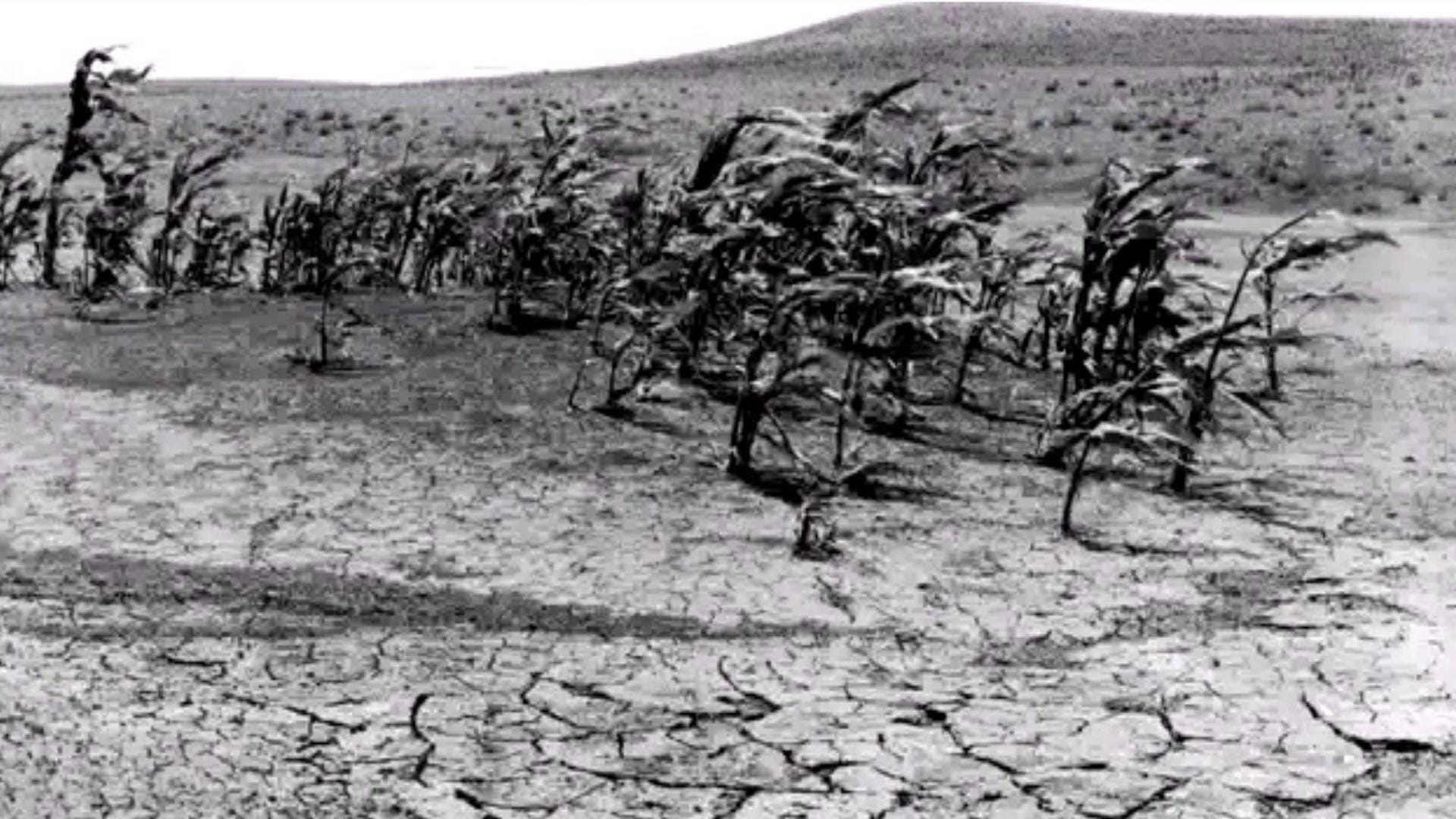
The data is clear. The story is not.
The data is not ambiguous. It hasn’t been for fifty years.
The original Limits to Growth was published in 1972. The first IPCC report in 1990. The Great Acceleration — the moment when every ecological indicator bends sharply and simultaneously upward — began around 1950. CO2, species extinction, deforestation, ocean acidification, aquifer depletion, topsoil loss.
Not projections. Measurements.
The scientific consensus is not a debate. It is a verdict.
What has been debated — loudly, expensively, strategically — is the story we tell about it. Humans are resilient and ingenuous. Technology is accelerating. Miracles have happened before. This is the age of spiritual evolution. These are not data points. They are incantations. Comfort stories dressed in optimism.
And of course there is the most aggressive form of denial. The one that is manufactured with interest in mind. The idea that climate change is an hoax. That story burned the only window we had for action. So it's not just denial: it's engineered denial. Possibly the most consequential disinformation campaign in human history.
Climate denial has no data. It has hope. It has manipulation.
But as a substitute for reality, is one of the most dangerous stories available.
Humanity’s greatest invention
Story is humanity’s greatest invention. It is what allowed us to cooperate at scale, to build cathedrals and constitutions, to transmit hard-won knowledge across generations.
No other species does this. It is the root of everything we call civilization.
It is also what allowed us to lie to ourselves collectively, and to do so with extraordinary sophistication.
The economic story of the last two hundred years — that growth is not just possible but mandatory, that an economy not expanding is an economy failing — required us to treat the natural world as an externality. A resource with no cost beyond extraction. The atmosphere, the oceans, the topsoil, the aquifers: all of it available, all of it free, none of it on the balance sheet.
We didn’t stumble into ecological collapse.
We narrated our way into it. The story preceded the disaster.
And seventy-five years ago, the disaster began showing up in the data.
We had the numbers. We had the models. We chose the story instead.
The story is not holding anymore
I am not writing this to assign blame.
Blame is another story, another form of avoidance.
I am writing this because we have passed the point where the story holds.
The cascade is underway. Not coming — underway. The sixth mass extinction is not a forecast. Military budgets have exploded globally as states sense what is coming and begin positioning. The Iran conflict alone carries the potential to compress timelines in ways no model can fully account for, because models are built on rational resource allocation and panicking civilizations don’t optimize — they accelerate.
The question of whether it is happening is closed.
The only open variable is timeline.
(you can also check this related post: “The Death of the Shared Story”)
The models, however imperfect, suggest 5 to 15 years before disruption cascades faster than any system can absorb. A phase where food stability, water availability, and political coherence begin failing simultaneously and visibly. Some variables could shorten that window: a regional war, a financial collapse, a bad harvest across multiple continents due to increase in oil prices, these triggers are no longer hypothetical.
Timeline
Here is what thirty years of watching people face the unthinkable has taught me.
There is a moment — it comes differently for each person — when the story breaks. When the gap between what we’ve been telling ourselves and what is actually happening becomes too wide to ignore. That moment is brutal. I have seen it destroy people who had no framework for it.
After denial comes anger — at the system, at the generation that burned the window, at the ones still pretending. Then bargaining. Then the grief finally lands. And on the other side of grief, if you can get there, is something that looks nothing like despair. Acceptance. Not resignation. Acceptance. Arguing with reality never ends well.
And from acceptance comes new possibilities. Not despair. Not frantic activity. A strange and new clarity
The analogy I keep returning to is the person given a serious prognosis.
Three months, maybe six, the doctor says. What do you do with that?
Some people spend those months in denial — chasing treatments, bargaining, refusing to let the knowledge land. Some collapse. And some, eventually, ask a different question entirely: given this, how do I want to live?
That question — given this, how do I want to live — is the one I think our civilization is being asked right now. Collectively, and each of us individually.
The denial response is to keep optimizing within the existing story. To reposition, to hedge, to find the right bunker or the right investment or the right narrative that makes it manageable.
The other response is harder and, I think, more honest: to let the story break, to sit in what that feels like, and then to ask what actually matters in the time that remains.
What are the relationships worth tending?
What is worth making, sharing, celebrating?
Where is there water? Community?
What does a human life look like without the growth imperative?
No hopium
I don’t have a redemption arc to offer. I have watched too many tragedies to manufacture one. Sitting with the discomfort is the cure.
Modern western societies have been insulated from consequence long enough that discomfort itself has become the enemy. We treat the price of gas as an outrage and the loss of convenience as injustice — while remaining remarkably incurious about the cost of our comfort to everything outside our immediate sight.
What I have is this: the end of denial, however brutal, is also the beginning of something more honest. And in my experience, honesty — even terrible honesty — creates more room for genuine living than the most elaborate story ever constructed to avoid it.
The story served us. For a long time, it served us well.
It is breaking now. Possibly the end of everything human.
And possibly the beginning of something we have no name for.
This is a powerful description of the journey from denial, to collapse awareness, through to collapse acceptance (what Michael Dowd calls “post doom.”) Many are in this place now and many more are on the journey. Some of us are gathering to be in service to life and regeneration, as this is what our heart calls us to do. I’m so appreciating your writing, Gabriel, and sharing often with our community of earth regenerators.
Thank you for this, Gabriel. A perfect description of what brought us to this point, and how, once the story breaks, we can choose (in all the ways that's possible) how we want to live in this time. I embrace the brutal truth as an invitation to remember what matters most. ❤️