

I. The Morning the Story Broke Open
Sunday morning, over coffee, I read a post by historian Heather Cox Richardson simply called "December 5". The analysis was unsettling, but something beneath it reached deeper: it touched something in me I’ve felt in the collective field for years.
My chest tightened, and whenever that happens, I share the story with a few friends for resonance. I trust my perception, but I check it against other nervous systems.
The replies came quickly and they could not have been more different.
Some mentioned collapse and others awakening. Some talked of danger, others of destiny and opportunities.
Four separate worlds reading the same words.
But it was not disagreement that startled me, it was the degree of divergence, the sense that we were no longer standing on the same ground.
As if the shared picture had already shattered, and only now were we noticing the pieces on the floor.
In that moment something became clear.
We are not merely debating interpretations.
We are no longer living inside the same story.
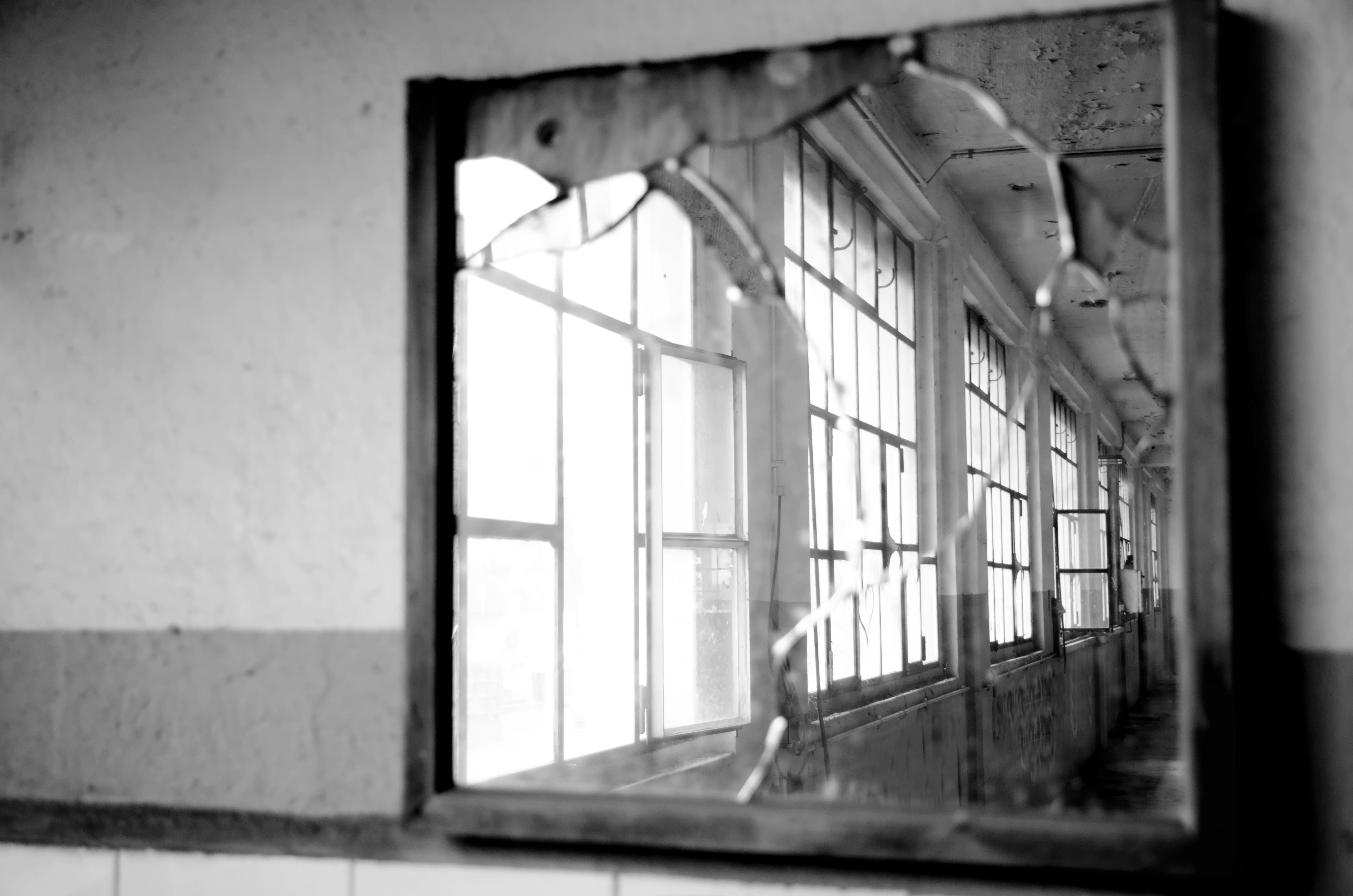
II. When the World No Longer Holds One Story
For nearly a century, the West lived inside a single myth of progress and stability.
A world where institutions were predictable, truth was accessible, and democracy formed a common foundation.
Whether the story was accurate matters less than the fact that it held.
Today it no longer does.
The same event now produces different worlds.
Not simply different opinions: different realities.
The old coherence has dissolved.
The center that once held the narrative together has thinned into mist.
I know this place well: it is the threshold before a paradigm shift.
Not chaos, but a field too fragmented to hold the weight of the world.
III. Why Data Cannot Guide Us Through This Moment
We grew up believing that more data would bring us closer to truth.
Yet data only works inside a stable frame.
Once the frame changes, data becomes a record of a world that is already disappearing.
The models we once used to understand society feel increasingly archaic.
They describe a world that no longer exists.
In moments like this, intellect looks backward.
It can explain what has happened, but cannot see what is coming.
IV. Intuition: The Quiet Compass That Still Works
When the collective story dissolves, the body becomes the last reliable guide.
Not as fantasy or wishful thinking, but as biological intelligence.
It is the same intelligence that moves flocks without hesitation, that allows forests to redistribute nutrients, that guides ecosystems toward balance.
Intuition works through sensing, through direct contact with the moment: short horizon, light grip, movement shaped by responsiveness rather than prediction.
To navigate a world without a shared story, we have to live the way nature lives:
in conversation with change, alive to the subtle signals that do not appear in data.
I learned this in large-scale emergency responses, where data was scarce, timelines were short, and thousands of lives depended on the ability to sense reality directly.
V. The Nervous System and the Fear of Groundlessness
Yet the human animal resists this shift.
We anchor ourselves in identity, nation, meaning, continuity.
These give the body a sense of ground.
When they dissolve, something deep in us panics.
I feel it in myself.
The tension, the fatigue, the longing for stability.
The unease that rises without a clear object.
Part personal, part collective.
It is raining in the world, so of course I am getting wet.
It does not mean I am dysfunctional, it means I am attuned to the field.
This is the landscape I help people navigate, finding stability inside instability, coherence inside turbulence.
VIII. After the Shared Story Dies
This is not the end of the world.
It is the end of a narrative.
Every metamorphosis begins with dissolution.
The caterpillar becomes something unrecognizable before it learns to fly.
Civilizations follow the same arc.
What emerges next will not be a continuation of what came before.
It will be born the way new ecosystems appear after fire.
Unexpected. Self-organizing. Alive in new ways we cannot yet imagine.
The age of a single story has passed.
What comes next will be plural, fluid, decentralized, relational: a coherence discovered moment by moment rather than imposed from above. And to us it may appear as chaotic, a new order we do not yet understand.
The shared story is dying.
But the world is not.
We are simply entering whatever waits on the other side of the old map.
VI. Where My Lens Was Forged
My worldview did not take shape in a California boogie café or in the stiffness of academic analysis.
It grew in places where the world had already cracked.
War zones, border conflicts, refugee camps, countries struggling to reclaim themselves after the tide of history retreated.
I studied political theory, but the real lessons came from walking inside systems while they were breaking. When maps no longer matched territory. When narratives no longer matched reality. Where people lived in a world the old story could no longer explain.
Those experiences leave an imprint.
Anyone who has lived through collapse develops a certain way of listening.
Not for drama or for headlines, but for the subtle fractures that appear long before the structures fall.
So if my tone sometimes carries a shadow of caution, it comes from memory, from recognition of the pattern. I can feel the fear but it does not forge my story anymore.
Because I trust life.
I have watched renewal rise in places where every rational metric declared it impossible. I saw nature reorder itself. I witnessed communities reweave.
Life always continues with quiet insistence.
Empires and ideologies do not share that resilience.
They are seasonal.
They bloom and fade.
VII. My Biases, Without Apology
Since clarity matters, I name my leanings openly.
My worldview bends toward democratic-social values.
I distrust any vision of society built on uniformity or on nostalgic fantasies of order.
I hold a deep aversion to force and the illusion that violence can create balance.
And my faith in the future rests in the intelligence of nature, not in political mythology.
But what shapes my analysis runs deeper than ideology.
It comes from a fusion of political understanding, spirituality, somatic awareness, psychology, myth, and the quiet patterns that reveal themselves beneath events.
I do not look for the correct story.
I look for the deeper architecture of meaning behind the stories we tell.
The wide spread of reactions to the article this morning showed me that something essential has already changed: the shared frame is gone.
What remains is our capacity to stay coherent while the story rewrites itself.
Subscribe — or even better, become a paid subscriber. Once I reach 100 paid subscribers (I’m already halfway there!), Substack will add a tag that could help me gain more visibility.

Engage (free and powerful!) — Visit the website, find the post you enjoyed most, and leave a comment at the end. Extra karma point if your comment is impertinent, sassy or even contains a question!
PS: “Change Your Story, Change The World” is a storytelling endeavor that looks deeply into the psyche that creates the stories we live by—with the intention to help us shape better stories, both personally and collectively.
Because the stories we tell are the reality we live.
Many folks feel the social fracture, but:
1. They cannot name the source.
2. Have no idea how to repair the dissolution.
I know this sounds simplistic, but until we stop the inputs to our psyche (via the information device connected to our hand 24x7), I don’t see a way out.
I now live in a world where everyone is looking down and living elsewhere except the wonder of the present moment.
Love your work.
“This is not the end of the world. It is the end of a narrative.”
This felt like truth spoken from inside the fracture - not as fear, but as recognition. To me, it reads as an invitation to stay responsive rather than afraid. Thanks for sharing.