

Are You Ready?
People are getting nervous. I hear it in my conversations, read it between the lines of what my clients share. Something big is coming, most of us feel it even if we can’t put a finger on it. And so the reflex is to prepare.
Some buy land in the country and plan to grow food. Mostly those who never grew food before. They soon realize that growing food is a full-time skill that takes years to develop, that all your tomatoes ripen in the same two weeks, that a bad season wipes you out, and that a hungry neighbor with a gun will harvest your garden before you do.
Some plan to move to an island. Great plan until the supply boats stop running, the water table drops, or the generator runs out of fuel.
Some decide to stay in the city, betting on the network. Cities run on invisible infrastructure, water pressure, electricity, supply chains, sanitation. Pull one thread and the whole fabric fails. Fast.
All of these options share the same flaw: they assume you can predict the form collapse takes and plan accordingly. You can’t. Complex systems don’t fail on schedule or in recognizable shapes. Yugoslavia didn’t fall apart like Rwanda. New Orleans didn’t fail like Beirut.
Around 1200 BCE, virtually every major civilization in the Eastern Mediterranean collapsed within a few decades. It is known as “the Bronze Age collapse” and it looked like nothing anyone had seen before. Still today the causes remain unclear.
There is only one thing you can prepare that will work for that level of uncertainty. Only one thing that will serve you across every possible scenario.
YOU.
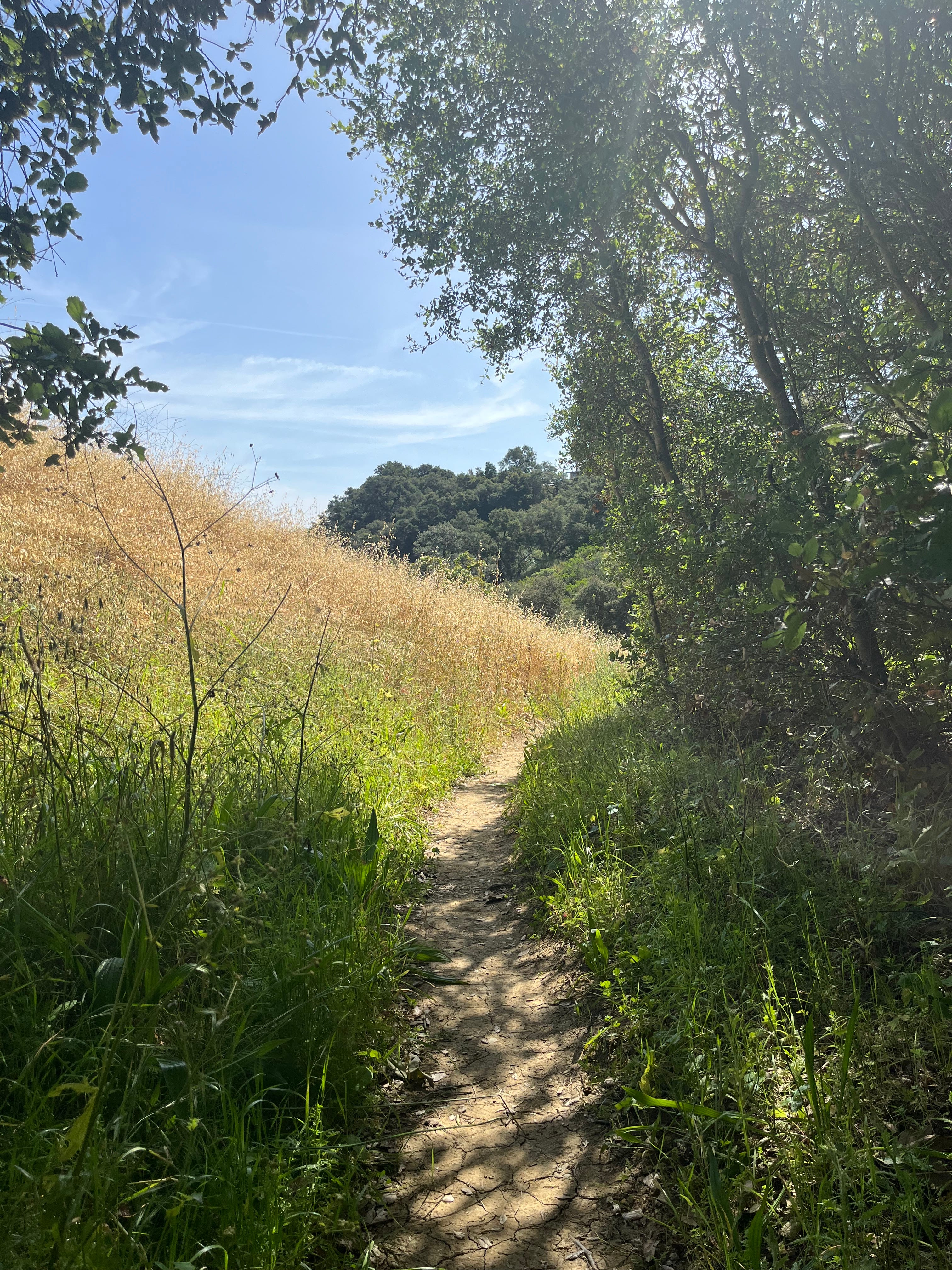
I spent thirty years in conflict zones, in collapsed countries, in refugees camps. I survived without a gun or a bunker. I survived because I could read situations, stay calm, move fast, travel light, and connect with people quickly. None of that came from equipment or preparedness. All of it came from inside, from the relationship you build with the unknown.
None of the points below are valuable for collapse only. They would help anyone lead a good life, collapse or not, stripped of what was never necessary.
1. Daily Practices — Build the Foundation
The body is the only asset that moves with you.
Not your savings, not your property, not your stockpile.
Your body.
Walk one hour every day. In nature if you can. Increase regularly until distance stops being a limitation. Walking is what the human body is designed for. No running or swimming, walking. Walking is a practice that will keep you healthy, stabilize your nervous system, enhance your creativity. The list of benefits is long.
Get a bicycle and make it your primary transport. Build a daily practice of yoga, taichi or qigong, not for flexibility but for the relationship it builds with your own nervous system. Take cold showers, get use to discomfort.
Learn to fast. Start by skipping a meal. Then a full day. Work up from there. Fasting is great education. You learn what hunger actually is versus what anxiety feels like when it pretends to be hunger. You discover the body has reserves you never knew existed. I once did a modified Ohsawa protocol, plain rice, salt, oil, nothing else, for two weeks. By the end I understood food differently.
None of this requires money or equipment. It requires only practice.
2. Immersive Experiences — Reorganize Yourself
Some things cannot be learned gradually. They require full immersion, discomfort sustained long enough to break through the other side of it.
Take a Wilderness First Responder course. Ten days of learning to make decisions under pressure with limited resources and no hospital nearby. It teaches medicine but more than that it teaches how to think when someone is bleeding in front of you and you are the only option. That quality of mind is transferable to everything.
Do a vision quest. Four days alone in the wild, no food, no water, no shelter, no clothing, no distraction. Find out who you are when life removes the scaffolding. I did one in an Oregon forest with bears and mountain lions. By day four my body was so still and so present that I felt I was drinking from the sound of the river nearby and did not get thirsty. I am not speaking metaphorically. Something shifts at that threshold that no book or workshop can simulate.
Go camping alone with minimal gear, in real weather. And before you ask “No, Burning Man does not count”. Do not chose an organized retreat. Go alone, uncomfortable, in the dark. One night teaches more than months of reading substack.
These are not recreational suggestions. They are reorganizing experiences. You will return different.
3. Stay Healthy — The Unglamorous Work
This one is a rabbit hole. To do it justice we would need to define what healthy means.
In the past I have covered the subject of health in various posts.
Take the 5 bodies test and see where you stand health wise when you look at health more than just skin deep.
Of course be up to date with your dentist, your doctor. Get a spare pair of glasses. Understand your medications and where possible reduce your dependence on them. A health problem like a dental infection in a collapsed infrastructure scenario is not a minor inconvenience. In my early years of traveling I had my appendix and my wisdom teeth removed.
The philosophy here is simple: build an inner resilience that is hard to throw off balance.
The body you take into uncertainty is the one you have been building or neglecting for years.
There is still time to shift that.
4. Go Offline — Rehearse Absence
Stay offline for a full day and night. Zero screen time. No phone, no computer, no WiFi. Then increase. Do it regularly until it stops feeling like deprivation and starts feeling like relief.
Technology is amazing. I am writing this from my garden on my laptop, the document is online. This is not about technology. It is about recognition. Observe how you feel without a screen, the energetic differences. Without rehearsal we mostly feel withdrawal. With experience we can also feel what technology does to our energetic field.
Connectivity matters. But connectivity linked to infrastructure is a weak spot. Infrastructure fails. The person who has never spent a day without a screen will be more disoriented by its absence than by almost anything else.
There is also something else: silence reveals what noise was covering. Most people find that uncomfortable at first. That discomfort is precisely the point.
5. Community — Your Actual Safety Net
No individual preparation substitutes for community. Historically almost all survival is collective. The lone prepared individual is a romantic fiction unsupported by historical record.
Know your neighbors by name. Join something local and physical, music, singing, dance, martial arts, anything that puts you in a room with people regularly around a shared practice. Strengthen the muscles, the ligaments of a community that might help when systems don’t.
Identify who you actually want around in a hard moment. Get closer to the people you love now, not later. Practice asking for help before you need it.
Community is not networking. It is not Social Media. It is not followers or subscribers.
It is people who know your face and would notice if you disappeared.
6. Reconciliation — Clear the Weight
This is the section most people avoid entirely.
Write the unsent letters. Finish the unfinished conversations. Repair what can be repaired. Release what can’t. Make peace with old relationships, with family, with your own history.
This is not luxury therapy. It is practical. A person carrying unresolved weight makes bad decisions under pressure. Grief, guilt, unfinished business, these are cognitive loads that consume bandwidth you will need.
And underneath all of it: make peace with dying. Old Bushido texts describe the only way to eliminate fear from the battlefield is to have already died before the battle.. Some Zen traditions have a death meditation. Buddhists have the bardo teachings. Wisdom tradition that produced genuine resilient people placed this at the center.
You cannot move freely while you are running from death.
7. Guns
Get rid of yours if you have one.
I know that one is going to piss off some people. Yet, here is what thirty years in conflict zones taught me: a gun shifts an encounter with a stranger beyond a line, we skip over the possibility of connection to go straight into threat management.
So unless you are ready to kill (and you will not know until facing the option) or are a trained killer already, a gun only decrease your chances of survival. There will always be someone more desperate, more experienced, or simply faster, in front of you. It is arithmetic. Showing the other you are not a threat is what allows conflict to deflate.
I survived decades in war zones not because I protected myself with a gun but because I did not have one. That kept me in the register of communication rather than confrontation. It kept me moving, reading, connecting. Those skills saved my life more times than I can count.
The better weapon is always the ability to connect with people.
8. Strip Down — Before Life Does It For You
This one is harder to make into a list because it is more like a direction.
Keep your hair short. Stop using soap, shampoo, beauty products, gradually. Stop using toilet paper. Reduce car use. Quit a subscription every month. Own fewer things. Need less.
The goal is not minimalism as an art form. It is to find out what you actually need versus the story you've made about it. Most of what we carry, in our homes, on our bodies, in our schedules, is weight we accepted without choosing.
Collapse will strip it anyway. The question is whether you do it consciously, at your own pace, or whether life does it for you, on its own terms.
Common Denominator
Notice how everything in this post is worth doing right now, in your current life, even without collapse on the horizon. A stronger body, a quieter mind, real community, resolved relationships, fewer dependencies, that is just a better life. A better future can only be rooted in a better present.
The difference is that if something does come, and something always comes, in one form or another, you will be able to meet it.
I could have added a million things to this list. I kept it intentionally concise because it describes a way of being rather than a to-do list. You can misplace a list. You can’t misplace who you are.
The only common denominator across every possible scenario is you.
That is where the work is.
PS: “Change Your Story, Change The World” is a storytelling endeavor that looks deeply into the psyche that creates the stories we live by.
Because the stories we tell are the reality we live.
Thank you Gabriel `~Michael Justice...Sharing your light, CHEERS!
Wow! That's a pretty tall order for some of us who clearly have fewer years ahead than those that are behind. But the principles are sound, and making small steps in each category, or even just a few, should result in some benefit for one's self and others. Thank you.