

So Far so Good
In the 1995 French movie La Haine, Mathieu Kassovitz opens with a monologue spoken over a footage of riots:
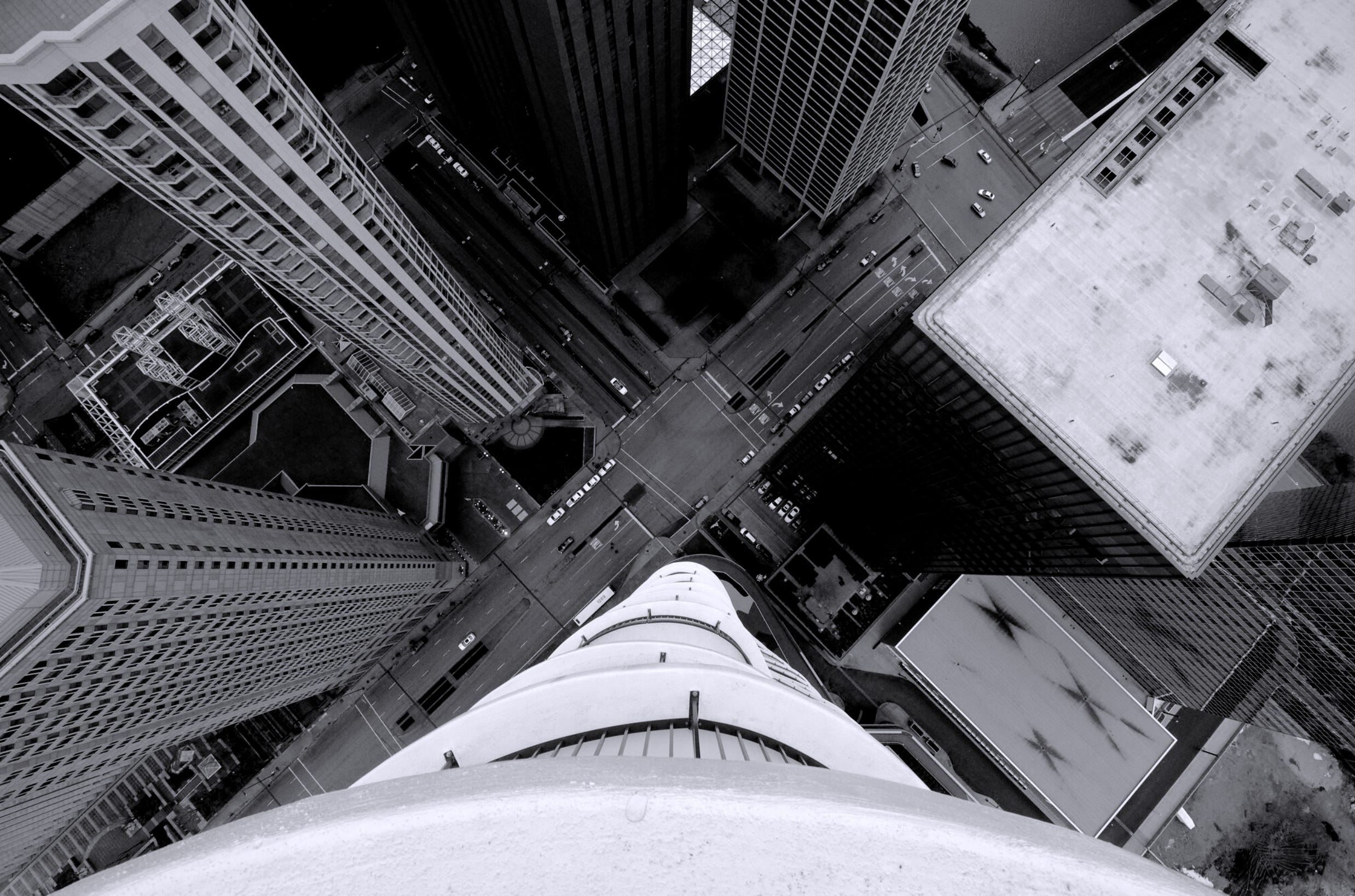
A man falls from a fifty-story building.
As he falls, he passes each floor and tells himself:
Jusqu’ici tout va bien... jusqu’ici tout va bien... jusqu’ici tout va bien.
(So far so good… So far so good… So far so good.)
The problem is not the fall. It’s the landing.
The mantra of denial all the way down.
This would be humor if it was not horror in the same breath.
It is both. And also the most accurate description I have of where we are today.
The Fall
The following points are beyond interpretation. This is scientific data and documented history.
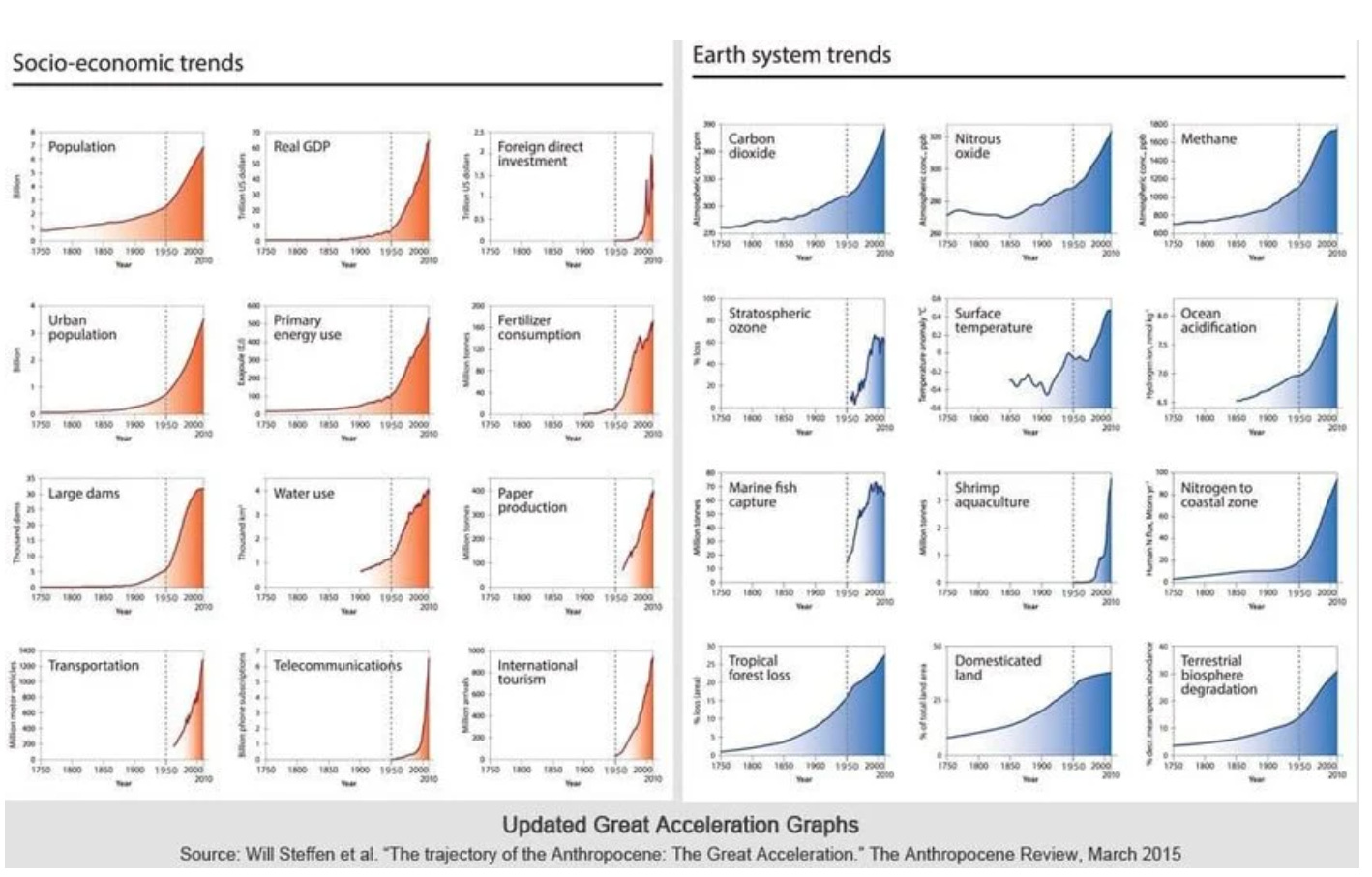
1950: the Great Acceleration begins. Every ecological indicator : CO2, species extinction, deforestation, ocean acidification, aquifer depletion, topsoil loss, bends sharply upward simultaneously. Not even projections: measurements!
1972: Limits to Growth published. The models are clear.
1977: Exxon’s own researchers confirm the link between fossil fuels and planetary warming. The findings are buried. We started manufacturing doubt instead.
1988: NASA scientist James Hansen testifies before Congress. The window for meaningful action is open.
In the decades that followed, the science did not change, the data was only clearer.
The window closed because we changed the story for a more convenient one.
This is by far the most consequential disinformation campaign in human history. We burned the time we had and sent everyone to sleep.
The scientific consensus never was a debate. It was a verdict. Yet there was no executive to enforce it.
The only open variable now is timeline to impact.
The Acceleration
The falling man, somewhere between the 20th and the 26th floor, decides the solution is to fall faster.
The empire, facing civilizational stakes, pours billions into a war that makes sense only inside a story that stopped being true decades ago. The money that could have gone to soil, water, education, regenerative systems goes instead to the logic of the previous century. The cost is astronomical. The footprint catastrophic.
I could make this observation as a trained political analyst. Yet this is more like a clinical assessment.
Denial, in its terminal stage, accelerates.
The bargaining gets louder. The gestures get larger.
The falling man mistakes velocity for agency.
The Sophistication of Denial
The cruder form of denial is easy to identify. It has no data. Hope at best, propaganda at worst. Dangerous but visible.
The sophisticated form is harder. Today it wears the vocabulary of awareness.
Thinkers, public personalities, writers with thousands of readers. People who have traveled far enough to see the crisis clearly. Who have sat with the data, felt its weight, written beautifully about interconnection and the failure of the extractive paradigm.
And yet, at the last moment, they pull back, they fall for the same blindspot. They offer a frame that preserved the possibility of human continuity as its implicit condition. Inter-being. The mirror principle. The age of spiritual evolution. The more beautiful world.
Genuine insights. I mean that.
But used as the last refuge from completing the grief process. Bargaining disguised as wisdom. Or something more trivial: are they protecting their audience from a truth no one wants to hear, or protecting their subscriber count?
Try this, the test is simple:
Does the framework require human survival to remain coherent?
If yes, it is still anthropocentric. It has not yet crossed the last frontier.
As I wrote in a previous piece, "The End of Denial" is not the end of everything. It is the beginning of something more honest.
But you have to let the story break first. Completely.
The Last Frontier
Part I of this series traced the dissolving of filters I went though to sit where I am today. French. Western. White. Religious. Human.
Each one felt like reality until the next crossing exposed it as a lens.
The anthropocentric frame is not just another filter in the sequence.
It is the generative mechanism of the crisis itself.
The ownership logic, the story that the natural world exists as resource, that the atmosphere is a free externality, that growth is not just possible but mandatory, that story didn’t begin in economics. It began in consciousness. In the bedrock assumption that the human perspective is the perspective. That we are the measure.
The framework that created the problem can’t be the framework that resolves it.
Not because we are malicious. Because the frame itself cannot see past its own edge.
Acceptance
When you observe people receiving terminal prognoses, you will notice the following:
Most will spend their remaining time bargaining, chasing the treatment, the miracle, the narrative that makes it manageable. They will die within the story.
Some will let the diagnosis land. They stop negotiating with reality, and in the process discover something unexpected on the other side of the grief.
It takes courage to see reality without filters.
Yet the new frame comes a strange clarity:
The specific freedom of someone who has stopped bargaining with gravity.
From that ground something becomes possible that wasn’t before. Presence without agenda. Action without grasping. The question shifts from how do we prevent the unavoidable to how do we want to live.
The Bhagavad Gita is the most precise operating manual I know for a human being inside a collapsing system.
Act from duty. Release the fruit. The action is yours. The outcome is not.
That instruction was not written for comfort. It was written for Kurukshetra, a battlefield where everyone loses and the fighting continues anyway.
We are on that battlefield now.
The View
We are still falling.
Some are counting floors to maintain appearances.
Others are counting them out of respect for reality.
The man in the joke counts floors because it feels like agency.
We count, with data, with policy proposals, with spiritual frameworks, with this essay. The counting is not futile. Witnessing is not inaction.
But let’s not mistake the count for a parachute.
The ground is real. The fall is real. And from here, past the last filter, past the bargaining, past the need for the human story to resolve, something is visible that wasn’t before.
And that view will expand in Part III.
“Change Your Story, Change The World” is a storytelling endeavor that looks deeply into the psyche that creates the stories we live by.
Because the stories we tell are the reality we live.
Bargaining with gravity. The perfect metaphor for our collective state of being. No right, not wrong. Just chips on the table. The tragic comedy of it all.
Coming at this as a Christian theologian, it resonates with the passion and death of Christ. Rather than escaping his fate (which one can easily imagine he could have), Jesus walked all the way through the suffering and death that was demanded of him. The Presence that came out the other side was recognized by some, but not all, and many have simply re-cast him as a standard-bearer for Empire. I personally believe there will be a resurrection for our planet; whether humans will inhabit that new world, I cannot say.