
A Great Place to Start
I spent decades trying to make sense of the world. Political science training, thirty years in the field across five continents, working with everyone from small NGOs to the UN system. Conflict zones, humanitarian crises, state collapse. I was paid to read situations, usually fast, and act without ever knowing complete information while also involving large budget.
Yet, despite training and experience,
I can’t make sense of what I’m watching now.
I get the small pieces. The extractive logic underneath the noise. The legitimacy collapse of institutions. The media vacuum. The billionaire capture of political space. The dying empire thrashing as it loses its narrative. Those I see clearly enough.
But the overall pattern? The thing that makes it coherent whole? I keep reaching for it and finding nothing.
Initially it was bothering me. Until I remembered something from a different life.
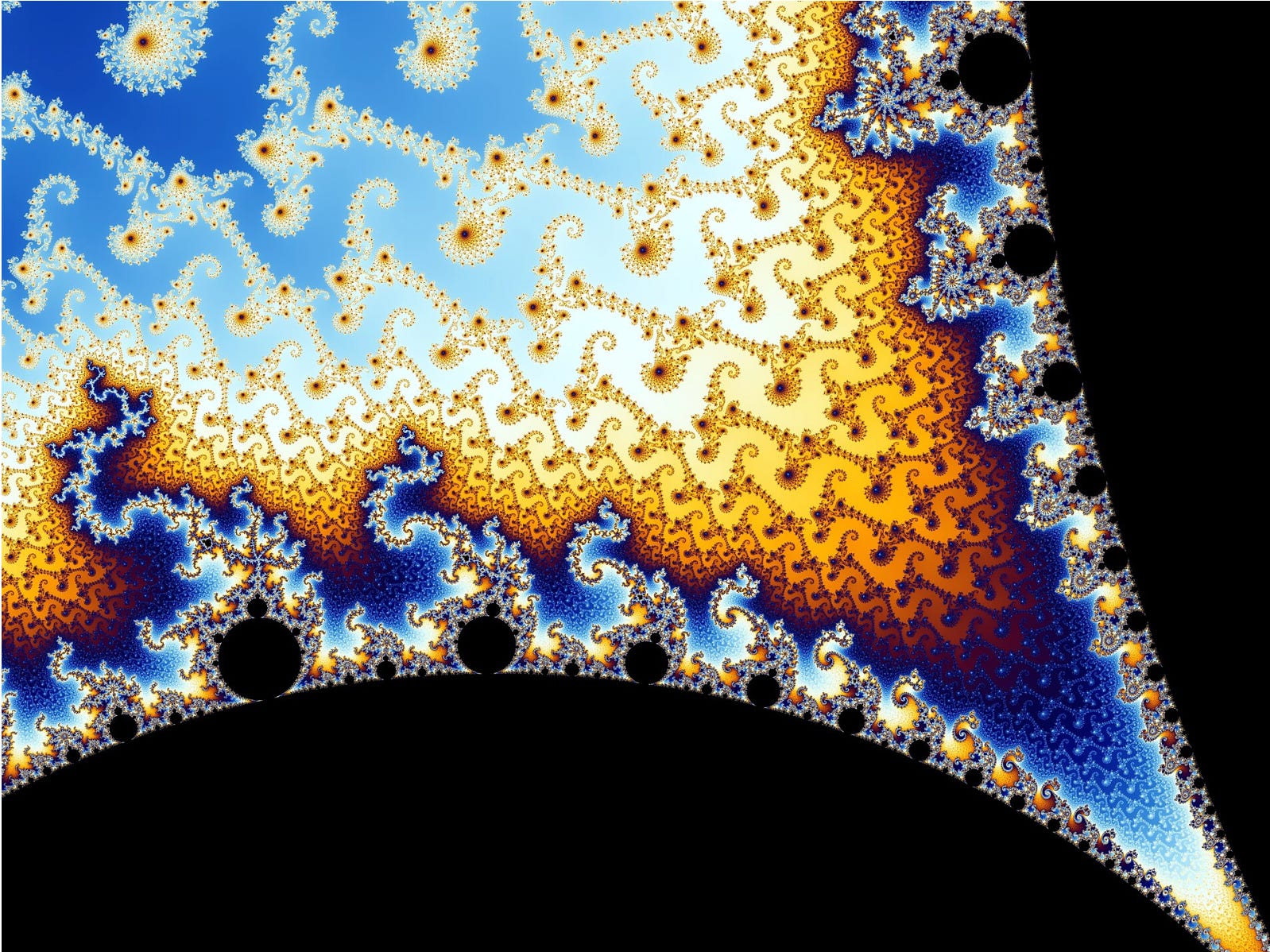
Confusionism
For years I delivered yoga teacher training in India. Intensive programs, several weeks, students living inside the practice morning to night. The arc was always the same. Week one: excitement. Week two: fatigue. Week three: confusion.
They would come to me looking slightly lost. “I’m confused,” they’d say, expecting reassurance that it would pass, that clarity was coming.
My answer was always the same. “Confusion is a great place to start.”
Confusion is not comfortable. But certainty is the obstacle. When we think we know, we stop receiving. The cup is already full. In deep transformation, in systemic change, dead knowledge gets in the way. What we need is not more information.
What we need is the capacity to sense what’s actually happening before our mind gets a chance to organize it into something familiar.
This became a running joke with a dear friend, Greg, a financial system analyst who had been watching markets and institutions with the same growing bewilderment.
Together we coined a name for it: Confusionism. A new spiritual system for the current age.
The first and only principle: if you are not confused right now, you are lost.
Models
My science reflex sent me looking for people who had tried to map this before me.
Wallerstein told me the Western-dominated world system has a 500-year arc, and we are at its terminal edge — not a crisis per se, more like a structural completion.
Tainter told me civilizations don’t collapse from attack. They collapse when complexity costs more than it returns. At that point, simplification becomes rational even when it looks like suicide.
Turchin tracked the mathematics of it: elite overproduction, popular immiseration, the predictable institutional breakdown that follows when too many people compete for too few positions of power.
Gramsci, writing from a fascist prison in the 1930s, gave me the most useful single sentence: the old is dying and the new cannot yet be born. In the interregnum, morbid symptoms appear.
Prigogine showed that complex systems under extreme stress don’t simply collapse. They reorganize. Islands of coherence emerge from the chaos, carrying new order that the old system could not have generated. Disorder is not the end of the story. It is the condition for what comes next.
And Fuller, characteristically, refused the diagnosis as endpoint: you never change things by fighting the existing reality. Build a new model that makes the existing one obsolete.
None of them gave me resolution. They gave me frame. Which may be the only honest thing available right now.
Immanuel Maurice Wallerstein: (1930–2019) American sociologist , founder of world-systems theory, recipient of numerous honorary doctorates, former president of the International Sociological Association.
Joseph Arnold Tainter: (b. 1949) American anthropologist and historian, senior lecturer at Utah State University, best known for his landmark study of societal collapse.
Peter Valentinovich Turchin: (b. 1957), Russian-American scientist founder of cliodynamics, professor at University of Connecticut, TIME magazine named him one of the most influential scientists of 2021.
Antonio Francesco Gramsci: (1891–1937) Italian Marxist philosopher and politician , founding member of the Italian Communist Party, imprisoned by Mussolini, wrote his most influential work from a fascist prison cell.
Ilya Romanovich Prigogine (1917–2003), Belgian-Russian chemist and physicist, Nobel Prize in Chemistry 1977, foundational figure in complexity theory.
Richard Buckminster Fuller: (1895–1983) American architect, systems theorist and futurist , recipient of the Presidential Medal of Freedom, held 28 patents, authored 28 books.
The author above are not alone. A growing number of scientists, historians and philosophers have been mapping this territory for decades. Rarely they have been invited to the table where decisions are made.
Clarity
What I do see clearly, when I stop reaching for the unified theory:
The acceleration. Cycles that once spanned across millennia now compress into decades and continue to accelerate. Geological, climatic, civilizational, technological, all peaking simultaneously. Complex systems do this approaching criticality. It is not metaphor. It is what phase transition looks like from the inside.
The climate conundrum. It is an existential confrontation that our political systems, built for short cycles, national borders, human-scale time, cannot metabolize. War is easier. War has agents, enemies, narrative, resolution. Ecological unraveling has none of those simple framework. So we choose war. Not just out of stupidity alone. From the limits of the cognitive architecture we are working with.
Anthropomorphism. And underneath all of it, the assumption we cannot quite bring ourselves to question: that creation exists for us. That our continuity is the measure of whether things are going well or badly.
American exceptionalism is loud right now, and destructive. But it is a local expression of something species-wide.
Human exceptionalism, the belief that we stand apart from and above the rest of creation, may be the deepest source of the misalignment we are living through. The wave does not get to negotiate with the ocean.
When I sit with that, something loosens. The system isn’t failing. It may be self-correcting. Not for our benefit, that’s the part we can’t stomach.
Intuition
I managed emergencies for years without reliable data, without clear models, often without communication infrastructure. You learn to navigate by something other than analysis. Call it intuition, call it embodied pattern recognition, call it listening to what the situation is telling you before you’ve decided what it means.
That capacity was easily available to me because I was the outsider. The aid worker who landed, assessed, acted, and left. The crisis was real but it was not mine.
That’s no longer true. I am inside the crisis now. We all are.
And yet the skill still applies. Perhaps more than ever. Not the certainty of the analyst. The receptivity of someone who knows they don’t have a model that holds, and has learned to function anyway.
Alive
So if we are confused right now, about the direction of the world, about which story to believe, about whether anyone actually knows what they are doing, I want to recall something simple.
Our confusion is not a symptom of insufficient information or inadequate intelligence. It is an accurate response to a situation that genuinely exceeds our inherited frameworks.
The people who are not confused are not ahead. They have simply stopped looking closely. They project familiar patterns onto a system that no longer operates by familiar rules. They mostly fail to read the field.
Confusion, held with honesty, is a form of attention. And attention is what this moment asks of us. Certainty is the trap.
I don’t know what comes next. Neither do you. Neither does anyone.
That’s where we start. From confusion. From aliveness.
“Change Your Story, Change The World” is a storytelling endeavor that looks deeply into the psyche that creates the stories we live by.
Because the stories we tell are the reality we live.
Gabriel, thank you for this very interesting perspective and read. I find myself both nodding and shaking my head along with you, which feels exactly right for this terrain.
I know the brain fog, the wischiwaschi, the Kuddelmuddel in the mind when the field grows too dense and the old maps blur at the edges. I agree with your ending: confusion can mark honest contact with a reality larger than our inherited frames.
Where I part toward another path begins with the excavation of my own trauma and its origins, and that lead me towards the question of how systems learn. Systems reiterate. They correct and get corrected through past behavior. They carry old code forward. They adapt it to new ground. Then they call the result culture, law, economy, family, nation, common sense.
From there, I began looking backward. I wanted to find the most recent points where women and other non-dominant groups lost large shares of autonomy and agency. I include the bottom twenty percent of any given society here, too, since hierarchy sorts them into the same lower field of sanctioned dependence.
I keep landing in a long, tangled braid: feudal remnants, property law, enclosure, patriarchy, inheritance systems, church authority, industrialization, empire, migration, race-making, capital, labor discipline, climate shocks, hunger, war, and transgenerational trauma. Each strand feeds the others. Each one changes shape inside a new setting.
One piece still surprises me: ancestral trauma appears often in discussions around PoC histories, and rightly so. In white European and settler contexts, the same lens rarely gets used with equal care. Yet trauma often lies near the start of migration. People leave after famine, debt, shame, land loss, religious pressure, political threat, family fracture, failed harvests, or sheer lack of room to live. They carry far more than luggage. They carry habits, fears, pecking orders, obedience codes, and survival scripts. The new world receives them, reshapes them, and then those scripts keep walking through the centuries in fresh clothes.
So I agree with you on confusion as a sane starting place. And I also sense a pattern under it, less like a single theory and more like a city seen from above at night. Roads, rivers, old walls, power lines, burnt places, lit rooms. I can see the shape more clearly than I can yet speak it.
Maybe this is where confusion earns its keep. It keeps the mind porous enough to notice the larger weave. Certainty flattens the field. Honest bewilderment lets the old structures show their seams.
And perhaps the work now is neither to solve the whole system nor to surrender to fog. Perhaps it is to stay alive enough to ask better questions, wide enough to trace old lines, and humble enough to let the pattern reveal itself before we name it.
Such huge ideas I am overwhelmed. I'm definitely confused, so I guess that's a good thing :) great column that made me questions so much.